
There’s usually a moment.
You’re in a meeting, someone asks what you do and you find yourself… adjusting the answer slightly. Not because it’s wrong, but because what you say doesn’t quite match what your website says. Or your capability statement. Or your company name.
That’s the gap.
And if you can feel it internally, your clients and prospects are most certainly seeing it externally.
Let’s talk about “brand purpose”
For a lot of business owners, especially mid-sized Aussie ones…brand purpose sounds like something dreamed up in one of those workshops that run for too long that produces a sentence no one really uses.
Let’s be honest, you don’t need a lofty mission statement to run a solid business. Most of you already have a real purpose. You employ people, deliver good work and build something that matters.
Meaning the practical version of brand purpose is much simpler:
Does your brand reflect who you are today and where you’re heading next?
That’s it.
Because your brand is not just your logo. As we’ve said before, it’s how your business is understood and experienced in the market, not just how it looks (A logo is not a brand). Your brand identity (logo) is part of it. An important part. But it’s only one piece. The issue isn’t that your purpose is wrong. It’s that your brand hasn’t kept up with it.
Why brands fall behind
Most businesses don’t stand still. You expand your services. Move into new sectors. Take on bigger clients. Build new capability. Shift from delivery to advisory… all sorts of growth and change.
But your brand? That often stays where it started. It got you through the early years. It worked. So, it stayed.
Meanwhile, your market has changed.
These days clients are researching you before they ever pick up the phone. Your website, your brand and your digital presence are doing the first round of filtering for you whether you like it or not (Are You Winning Work?).
At the same time, you’re trying to attract younger talent into the business. People who will judge you quickly. A dated name, clunky website or stale brand signals something about the business, even if it’s not entirely fair, which is often the case…but the gap grows, if the brand stays put the and the business evolves then the market reads the old version.
The signs your brand is out of step
Most leaders already know. They just haven’t labelled it yet. Here’s what it looks like in practice:
- You’re explaining the business differently every time
The website says one thing. Your team says another. You quietly correct both. - Your team struggles to articulate what you do clearly
Not because they’re not capable, but because the positioning isn’t current or you’ve outgrown where you started. - You’re attracting the wrong type of work
Projects that don’t reflect where you want to go, while better-fit opportunities don’t land. - Clients still see you as what you used to be
Even though the business has evolved. - You hesitate to send people to your website or hand over your card
Usually a pretty clear signal.
There’s also a softer version of this.
You know what you stand for. Quality, reliability, doing things properly but that doesn’t quite come through externally. Good intentions don’t automatically show up in your brand.
What to do when you spot it
The instinct is often to jump straight to a rebrand. New logo. New website. Fresh start. But before you do that, you need to work out what has actually changed. Because not every misalignment needs a full reset.
Refresh, rebrand… or something else?
There are really three levels to think about.
1. Brand refresh
This is when your fundamentals are still right, but your presentation is dated or inconsistent. You’re still in the right market. Your services still make sense. You just don’t look like the business you’ve become.
A refresh updates how you show up without changing who you are. As we’ve outlined here, it’s often more cosmetic than strategic (Is it time for a brand refresh?).
An example of how we have tackled this here: Losee Consulting
2. Rebrand
This is when something more fundamental has shifted. More than just modernising your language and your look and feel also needs to reflect this. Your positioning is different and strategically what you deliver to your customers/audience is different. Think when Instagram went from being a Polaroid logo for a photo sharing platform to a fully blown social media platform…
In these cases, you need to reposition the business properly. Not just update the visuals but clarify what you stand for and how you communicate it.
Committee for Brisbane’s recent rebrand is a good example of this.
3. Rename
Which of course triggers a full rebrand. This is the one that often sits underneath everything else. Sometimes the issue isn’t how your brand looks. It’s what it’s called… and it no longer makes sense in today’s world.
There are many examples of this in our history, more recently Coon, Australia’s favourite cheese renamed to Cheer, and Reskins and Chicos became Red Rippers and Cheekies… and in the B2B world, some years back….but glaring example of how times change… Isis Group, a leading fit-out and refurbishment group, named after the Egyptian Goddess, rebranded to Shape, for obvious reasons.
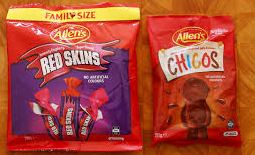
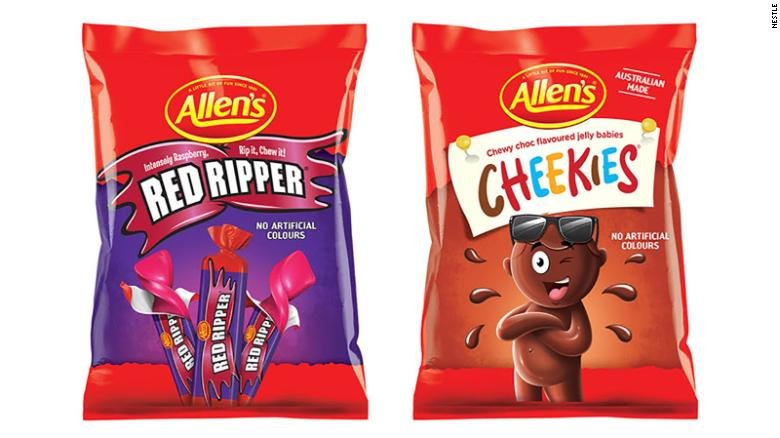

These are obvious examples of a sign of the times, an evolution of political correctness and other important associations. There are of course other less reactive reasons that businesses change names, such as companies changing leadership, buyouts, mergers, acquisition and even licensing.
In the business to business (B2B) world the most obvious are:
- A company named after a single service that now delivers much broader solutions
- A name tied to a specific sector that the business has moved beyond
- A founder name that no longer reflects the scale or direction of the business
At some point, the name stops helping and starts creating friction. You can’t talk or design your way around that. This is where you are truly no longer aligned to your brand purpose.
Renaming however is a bigger move, so it needs to be justified. But the signs are usually pretty clear:
- You constantly have to explain what you actually do
“If I’m honest, we don’t really do that anymore…” or “we now also do…” - Your name limits your growth
It ties you to a service, sector or location that is no longer accurate. - It creates the wrong first impression
People make assumptions before they speak to you and those assumptions are off. - It’s holding back recruitment
Particularly with younger talent who are making quick judgements. - You wouldn’t choose it again today
This is often the simplest test. If you were starting the business now, would you pick this name? If not, it’s worth paying attention to.
A quick reality check
Most businesses don’t need to rename but businesses should at least consider whether the name is part of the problem. Because if it is, no amount of visual refresh will fix it.
Good alignment of brand purpose and brand identity
You’ll know you’re on the right track when:
- Your team describes the business consistently
- Your brand reflects or nods to the work you actually do
- You attract the kind of clients you want more of
- You feel confident sending people to your website
It becomes easier to explain what you do. Easier to sell. Easier to recruit.
Why brand purpose and identity matter more now
The reality is, this isn’t a failure on your part. It’s just the world we’re operating in.
Things move quickly. Media moves quickly, and people are quicker than ever to form an opinion. Often before they’ve spoken to you, met your team or seen what you’re actually capable of. Your brand is doing a lot of heavy lifting in that environment. It’s being judged.
If it’s out of date or out of step, it causes gentle friction, not as a dramatic failure, but in quieter ways. Missed opportunities. Slower sales. The wrong conversations.
And to be clear, updating a brand isn’t a small task.
It’s not just a new logo. It’s your website, your proposals, your uniforms, your signage, your documents, your digital presence. There’s a real cost and a real ripple effect, which is exactly why many businesses put it off.
That’s understandable, but the longer the gap exists, the more it works against you. If a rename is part of the equation, there’s an added layer. People will naturally ask why and if that’s not explained clearly, it can create uncertainty. Handled well, though, it does the opposite. It shows intent. Progress. Direction.
A name change can raise questions, but it doesn’t have to create concern, it can raise all the topics you have been desperate to talk about with your clients. It’s constructive, so the key is clarity – and definitely not spin.
Why now?
In a market where people are forming opinions quickly, often before they’ve spoken to you, aligning brand with purpose matters more than it used to. If this has been sitting in the background for a while, you’re not alone.
Most of the businesses we work with are doing real work. The kind that matters, and their issue most certainly isn’t lack of purpose; it is that the brand telling that story hasn’t kept up. It’s a bit like wearing last year’s winter coat when it’s the middle of a Queensland summer, totally out of sync with the reality around you.
Sometimes it just takes a clear, practical conversation to work out whether it’s something to act on now, or something that can wait.